Showing posts with label Self Care. Show all posts

Thursday, December 6, 2018

Just for Fun: Learning How To Be Me


This post is somewhat of an experiment, and very different from what I normally publish for this monthly series of posts that are less library-y and more blog-y. You see, I've been buddy-reading How to Be You by Jeffrey Marsh with a friend. We read one chapter a week and then discuss. Sometimes we share the answers we gave to the questions Marsh asks. Sometimes we talk about the memories that arose as we read. Sometimes we talk about how hard but important it is going to be to embrace the ideas the author discusses. This week I'm jumping the gun, though, because one of the exercises in Chapter 5, "Let Go of Punishment and Control", really hit me hard, and I want to share.

On page 96, Marsh invites their reader (Marsh is famously non-binary, which is yet another reason for me to like them) to: "Ask someone who loves you what they like most about you." Wow. This is an exercise in vulnerability if ever I saw one, and I - like so many other people - am horrified at the idea of being that vulnerable.

But I did it. I asked the person who is Dante to my Randall what he likes best about me. His answer? My sense of humor. I couldn't help but smile, because that's a thing that I value about myself as well.

Before I asked him, though, I'd been thinking - and here's some more vulnerability for you - that I'm also someone who loves me. I not always kind to myself, but I do think I'm pretty rad on the whole. I'm going to be 46 soon, so it's about time that I started liking this person with whom I have a life long relationship, right? So, in keeping with the ideas from Marsh's book and as an exercise in self esteem and vulnerability, here are some things I like about me:

  • I'm clever. Yes, I'm smart, and I'd like to think that I've earned a certain amount of wisdom, but I'm also clever. I can see how seemingly disparate things fit together, sometimes in ways nobody imagined before. It's a thing I used to think everyone could do, but it's not. I'm not unique in this attribute, but it does seem to be rare, so I value my cleverness.
  • I'm a good friend. I am, for a few people in my life, the one person who is allowed to call them on their bullshit. I think that's because I do it lovingly and always phrase it that way. "I love you no matter what, and support you in your decisions whatever they may be, but..." is a thing I've said to friends - and meant every word. I also do the opposite. I've lost count of the times I've exhorted my friends to be kinder to themselves. "Hey, that's my friend you're talking about there. I think you should cut them some slack."
  • I have a culinary imagination. This is another thing I thought everyone could do until I learned otherwise. I can think about a recipe and rearrange it in my mind with other flavors that people might not think would work together, but that are fantastic. I have made risotto everywhere from pure as heck vegan to meat meaty meat. I can tell you which cheese will taste better in a specific circumstance (even though I'm now lactose intolerant). This talent also made it easy for me to sell wine back when I was a waitress.
  • I'm always looking for ways to improve myself. I will admit that I don't always enjoy the "why am I not best at this already?" part of learning something new, but I've come to embrace that stage as just a part of the process. I can easily tell you all the things that I'm currently trying to improve, but that's not the point of this post. However, I can say that the things I'm trying to improve are about skills and not the core of who I am.
  • Kindness is my highest aspiration. I'm not nice. Nice doesn't get the work done. Nice is... well... nice...? But nice always seems to want to tell people what they want to hear even when it's not the truth. Kindness, on the other hand, wants the best for people, even if that means a failing grade or a less than stellar evaluation. Kindness is also compassionate, and compassion is something we are sorely lacking in our culture.

So how about you? What's something you like about you? Feel free to tweet it or put it in a comment here, but you don't have to. Please, though, take a moment at least to ask someone you love and trust to tell you what they like about you. I know when I told the friend with whom I'm reading this book the thing I value most about them, it really resonated and I've seen that friend really embrace that quality in themselves.

Tuesday, November 13, 2018

Self Care For New Administrators (And Everyone Else, Too)

Am I writing about self care again? Yes, I am. It's important and bears regular repeating. I copresented last week at the NY Library Association about how a new library administrator can get up to speed, and in between talking about building partnerships and sharing the mistakes I'd made in hopes that the audience would learn from them, I talked about self care. I brought up self care (and promised I would bring it up repeatedly) when talking to a mentee recently. I tell the people who work for me that they need to go home if they're here after the normal end of the college's business day. Self care is important. I could probably write about self care every single week and it still wouldn't be enough.

The thing about self care that you need to remember, above all else, is that if you don't take care of yourself, you will burn yourself out. You will.

source

Besides, in the oh so important words of Audre Lorde: "Caring for myself is not self-indulgence, it is self-preservation, and that is an act of political warfare." With everything that's happening in our world it's especially important to take care of yourself. So, here's some things that I know are important for me. Your mileage may, of course, vary. But if you have something else you think I should include in this list, please respond on Twitter or wherever you found this posted, or even in the comments below.
  1. Find a good therapist. If you live in the Rochester, NY area, I can recommend someone (and against a couple of others). Your health insurance should be able to help, but if you don't have insurance, please still try. The National Alliance on Mental Illness will help you find someone who is less expensive or even pro bono.
  2. Get out of the office and out of the building for lunch at least once a week. I know that the amount of work you have built up is probably enough to frighten even the most efficient efficiency expert. I know it because I can say the same thing. Administrators always have something they could be doing. I don't care. Get out and away from your library, your campus, etc.
  3. Work no more than 45-50 hours per week. My contract obligates me to 35 hours, and I usually put in between 40 and 45. I adjust accordingly for when I'm at conferences or have personal appointments during the work day. See my comment about your to do list above. I know, really really, that you could probably work 80 hours a week and still not get everything done. You'll probably never be completely okay with it, but you'll at least get more comfortable with leaving things undone.
  4. Make friends at work if possible. The shape this will take is going to be different depending on what kind of library. For me, I've reached out to and become friends with deans, associate deans, professors, people who work in HR, an instructional designer, tutoring coordinators, and so on. (Please note that there are no librarians on that list. I know some people are friends with their employees, but I don't think it works.) This will give you a place to go when you're about to lose your cool for whatever reason. This will also give you a place to get historical context if you were hired from the outside.
  5. Make friends with other people who do the same job. Twice a year I go to a multiple day meeting and hang out with other SUNY library administrators. About once each quarter I go to lunch with the director of the public library in the town where my college is located. I get ideas from these people, but also I get validation.
  6. Get sleep. This doesn't always work out for me, but I try to be in bed by 10p because I know my body will wake me by 6a. You may think you can run on minimal sleep, but you're fooling yourself. That's especially true if you are - like me - solidly middle aged. You cannot burn the candle at both ends indefinitely, because eventually you won't have any candle left.
  7. Have something in your life that isn't about libraries and that's just for you. Go hiking. Play video games. I'm doing NaNoWriMo this year. Try crafting. Remember that you are more than your job.
You really are more than a library administrator, even with as much of your life as it might seem to take up. You're a gardener or a parent or a partner or a Cannibalistic Humanoid Underground Dwellers. Okay, you probably aren't that last one, but you get my meaning. Don't let go of the non-library parts of yourself. We need your voice in administration, so I need you to embrace self care.

Thursday, July 13, 2017

Unpacking to Move, by Angela Galvan

“Just move for a job” is advice The Profession enjoys doling out from positions of relative stability, a living wage, a healthy body and mind, and an established support system. As an MLIS student in Columbus, Ohio, I heard it from day one of my program: if you want a career you’re going to have to move away.

I have some experience with this.

Back in 2009 I fled a small town in southern Oregon for Columbus, Ohio, with two bags and only the clothes on my back to move in with people I’d met over Craigslist. What the Craigslist ad couldn’t have told me was I’d managed to install myself in a group of friends with no less than five librarians. Again, the job market in Ohio is a little saturated with MLIS holders. They convinced me librarianship was a good fit for someone with the combination of “curious about information and how it works” and “professional boxer” which is to say I used to be in the service industry.

I was happy in Columbus for years. I had a community, a mentor who was the big brother I never knew I needed, and a boss I could communicate with exclusively in emoji. I got Midwest winter bragging rights by walking to work during the vortex. All of this would change when I started getting campus visits out of state.

I eventually accepted a position at a college town in New York with Population: Some Folks. This was a Big Fancy Librarian Job, the thing we’d hoped would come. My partner would follow me in spring and I would learn to drive—a remnant from my Portland upbringing—and we were headed for a future with Pinterest boards until we weren’t anymore.

The everyday of my personal life was hit by a landslide. I could recognize some of the world I inhabited, but it was now fundamentally different. I lived alone with the cat who was not outpacing crawly things, in a shoebox apartment where I made soap and taught myself guitar until I lost sensation in my fingertips. Something about the fret action. The dream of gentrification without a surrounding city.

I formed an armistice pact with the spiders, who became confident, gun slinging assassins in the increasingly rich fantasy life my brain produced to deal with isolation. The payroll spider who lives in the sparse kitchen cupboard is named Perry. He has an eye patch and smokes. Worse, I couldn’t drive and the only school available to remedy the issue closed. A creepy clown allegedly appeared near campus and I became convinced I was living in the lite version of a Stephen King novel without a fun curiosity shop. Unable to leave town under my own power, I threw myself into my new job for a distraction. This kind of worked until I went home and there was nothing to do but unpack boxes for a life that felt distant to the point of invoking dig markers, stakes, and string. Most of my carefully packed possessions went to Goodwill. I spent many hours learning silence. Stillness felt uncomfortable for me after such a long period of searching, applying, and moving.

If I had the choice I would still move, though I can’t say I would have picked a rural area without addressing the mobility problem. While work/life balance in reality means periods of time where work takes priority, being a whole person who isn’t consumed by my job makes me a better librarian.

If you’re looking to move, here are some things to consider I haven’t seen in the usual discussions of relocation: 

Practical issues 
  • Will you or the people you care for have access to adequate healthcare? If your insurance is good but your nearest specialist is hours away, is that going to work?
  • Can you function if there isn’t public transit?
  • What is the political climate like? Are there “bathroom bills” and similar in the legislature?
  • What workplace protections exist at this employer? What about the state?
  • If the life you’re imagining vanishes tomorrow, how will you cope?
  • Does the employer offer relocation assistance? This is something you should ask about if you receive an offer. Make sure you understand what is and is not covered.
  • Is there a long delay between your hire date and first paycheck?
  • What is the rental market like? Many of the leases in Small Town New York are on the academic year which makes housing a challenge.
  • Where do the rest of the library people live? If you’re rural, is everyone commuting or do employees live in town?

Finding your people

Librarians—as most service/helping professions do—tend to gain significant swatches of their identity through work so while it’s tempting to lean hardest on coworkers for emotional labor and support, there’s a whole host of other things to try. Many of these are from the advice blog Captain Awkward:
  • Volunteer.
  • Take a class that isn’t academic. Spending all day looking at a screen or teaching sometimes means recovery is elsewhere, often in physical activity or making stuff.
  • Find a local meetup for a hobby you enjoy.
  • Join a low pressure recreational team.
  • Find gamers and start a town-wide version of Humans versus Zombies.
  • Be part of a virtual community you’re already familiar with or find a new one. This could range from a Twitter chat to online games.
  • Join a community choir. Singers are often like librarians in that they are extroverted in specific situations. Choir practice is one of those.
  • Attend town meetings and city council events.
  • Go to trivia nights. You don’t have to partake of alcohol if that’s not your thing and most teams will be delighted to have you.
  • Try a Brand New Thing! 

In the absence of people, a critter helps. Here’s mine:


It’s hard to know what a place is really like until you’re living there. It’s hard to know a job until you’re in the minutia of things, first encounters with ‘other duties as assigned’ or have a true understanding of the workplace culture from a campus visit. Moving feels final because of how exhausting it is under the best conditions. Adjusting after a move like this requires time, patience, and most of all kindness. Feel the feelings. Hug the animal, person, or thing.

What do you wish you’d known when you moved? Share in the comments!


Angela Galvan is the Digital Resources & Systems Librarian at State University of New York, Geneseo. She tweets at @panoptigoth.

Tuesday, April 11, 2017

Self-Care Revisited

Seven months ago, I wrote a post that was all about self-care. With the state of things in national/international politics, and the fact that today is National Library Workers Day, I figured it was time to write another self-care post. So, here are some things to bring you joy or smiles or hope or at least satisfaction.
  • Joy: Finding a new favorite author. A couple of years ago, I noticed a bunch of people talking about the work of Seanan McGuire, and after a couple of more pointed discussions (one with Jenica Rogers, I remember), I decided to give McGuire's books a try. And now she's my favoritest author.
  • Smile: Taking the plunge and hanging out with Science Twitter. I'd been flirting with this part of the Twitterverse for a while, but I saw a recommended list of STEM people of color and followed them all. Then I followed some more scientists. Among other things, I've gotten to learn about: bird identification, scat of all kinds, and awesome sharks. Bonus - they love librarians! (If you want a rec for who to follow, look at who I'm following on Twitter and search for "science".) The smiles are so frequent.
  • Hope: I'm planning to attend a March for Science on 4/22. I haven't decided if I'm going to DC or to Philly, but I'll be attending with a work friend - one of our science professors. 
  • Satisfaction: I've made some good progress on a couple of work projects that got held up by other work priorities.
  • Joy: Binge watching. I had to take a couple of sick days last week (not as joyful, I know), but I watched two whole seasons (that have recently been added to Netflix) of The Great British Bake Off and wow how I love that show.
  • Smile: My cats. There has been Puddy Wrestlemania levels of tussling lately, and a couple of days ago Viktor tried to hide behind my feet while Zephyr walked by me. She saw his tail sticking out, and pounced, but the whole thing made me grin.

So how about you? What is bringing you joy, smiles, hope, and/or satisfaction?

Tuesday, January 31, 2017

Finding Hope

This week is LIS Mental Health week. There's so much I want to say, and could discuss. There's the specter of a completely unqualified candidate for Education Secretary and the reality of the Gaslighter in Chief and his unconstitutional executive orders. We also have the same problems as before, working in a field that is chronically undervalued and underfunded. And then there's the ish of being in the Northern Hemisphere and getting less sunlight than we need this time of year. Basically, this is a recipe for hopelessness. The best way to fight that is to make sure you take care of yourselves. This is too important a time, and we need every single one of you.


I really hope this doesn't come across as preachy, by the way. I know I need self-care reminders, so I'm sharing. Here are things we all need to do. Also, I fully acknowledge that I've covered some of these topics before...

Sleep. You are not going to do anyone any good, least of all yourself, if you are running on empty. And if you are having problems sleeping, talk to a medical professional.

Have a life. You can't just protest and worry about the fate of the world. You can't just work. You can't just any one thing. Spend 5 minutes a day with Duolingo learning a new language. Send a text to a friend.

Try to limit the junk food. This is one where I have problems. I know m&ms are going to make me feel like crap, but I still eat them. Instead, try to eat peanuts or an apple.

Get outside at least once a day. And don't just pass through it. Actually stop and look around. Say hello to the squirrel who is yelling at you as you park your car, or notice the exact color of the sky.

Laugh and cry. You need these releases. I cannot not laugh when watching Death at a Funeral (British version for me, thanks) and I cannot not cry when watching Lilo & Stitch (that scene at the end where he explains his family guts me every time), so when I need a release I'll watch these.

Take care of yourself medically. Don't ignore a persistent cough or a part of your body being sore. If your hopelessness (or anxiety, or mental numbness) gets away from you, go to the doctor - there is no shame in needing medicine.

Try to be self-aware. This can be extremely difficult, I know, so I recommend the tool I use - it's a checklist titled "Everything Is Awful and I'm Not Okay: Questions to Ask Before Giving Up on Yourself."

And most importantly, pay attention to your victories. Small victories like bringing your lunch from home or emptying the dishwasher. Big victories like speaking up for yourself or supporting a protest. Write them down and cherish them like the jewels they are. They're your best weapon against the dark.


Thursday, November 17, 2016

Self-Care: Happy Making Stuff

I am taking the recent turn of events in our country seriously, but now - more than ever - we need to take care of ourselves. We need to take care of ourselves because we need to take care of each other, and if we don't take care of ourselves we'll run out of energy for helping others. I know audre lorde was speaking to all of us when she wrote: “Caring for myself is not self-indulgence, it is self-preservation, and that is an act of political warfare.” 

Since I don't have a guest post ready for today, I decided I'm going to publish a list of things that bring me joy or smiles or hope or at least satisfaction. I've seen it on other blogs and a lot on social media. I'm also going invite you to either do the same on your blog or social media or at least in a notebook.
  • Satisfaction: That first perfect sip of your first cup of coffee. Cream and sugar, please. 
  • Joy: Poetry that is so good it takes up residence in your gut. Tom Hennen's poetry did this to me recently.
  • Hope: How ready the ACLU is for the coming fight. I've been a member since 2001, and I'll always be a member.
  • Joy: The way my cats have a pecking order for who gets and give affection to me first and second. Viktor waits, politely, a little back from the door when I get home because Zephyr, as a longer term resident, gets first dibs. 
  • Smiles: That I know my neighbors' dogs' names, but not theirs. Lady is the black lab and Padfoot is the teeny muppety looking pup.
  • Hope: Students on my campus had an anti-Trump rally this week. I went out and cheered.
  • Satisfaction: That my muscle memory is coming back and I'm playing the guitar almost as well as I did before I stopped for a while. Even sight reading for the most part.
  • Smiles: Attended a wedding last weekend and danced so hard for so long that my legs hurt the next day.
  • Joy and Satisfaction and Smiles and maybe even a little Hope: NONONONO Cat.


Hope this list helps you at least a little. Writing it helped me a whole heck of a lot.

Tuesday, November 15, 2016

Nothing Blooms Every Day: On Work Life Balance in Librarianship (My RECIP/CLRC Keynote)

Below you'll find something approximating the keynote talk I gave a couple of weeks ago at RECIP/CLRC. It's mostly what I wrote ahead of time, with a little bit of my memory of what I said instead. Also, I had a mini-breakout session in the middle of the talk and have tweaked what I wrote to fit this context. Thanks for reading.


Before I get into the meat of my talk, I want to thank Tyler Dzuba and the rest of the conference organizers for inviting me here today. One of the driving passions in my career is helping library science graduate students and early career information professionals, so this conference’s raison d’etre is very near and dear to my heart. On top of that, what a gorgeous time of year to be this far north. Delaware trees have started to turn, but nothing like what I saw on my drive up.

I have one more thing I want to tell you up front... a caveat of sorts, if you will.

warning sign with human figure falling off a cliff
source

You see, even though I knew my topic for this talk almost immediately, I had a hard time writing it. When the organizing committee approached me, I’d been doing a lot of reading related to this topic and expected to have a good handle on it by the time the conference rolled around. That just didn’t happen, and I felt stumped.

Whenever I’ve given presentations or workshops or whatever in the past, whether invited or proposed, I was always coming from a place of knowledge. I was the one saying, “hi, I did a thing, and you should let me teach you how to do a thing.” But that just isn’t true here. The reason I’d been researching this is because I was having problems myself. In fact, one of the ideas I had for the title of this talk was “Learn From My Mistakes: On Work Life Balance in Librarianship.”

a raccoon stuck face first in a recycling bin
source

I've made lots of mistakes in this way, and the reality is that I’ll likely always have problems. So there I was, someone supposedly so knowledgeable that I was invited to give a keynote. Yet I was at a loss.

Actually, I was feeling pretty sorry for myself.


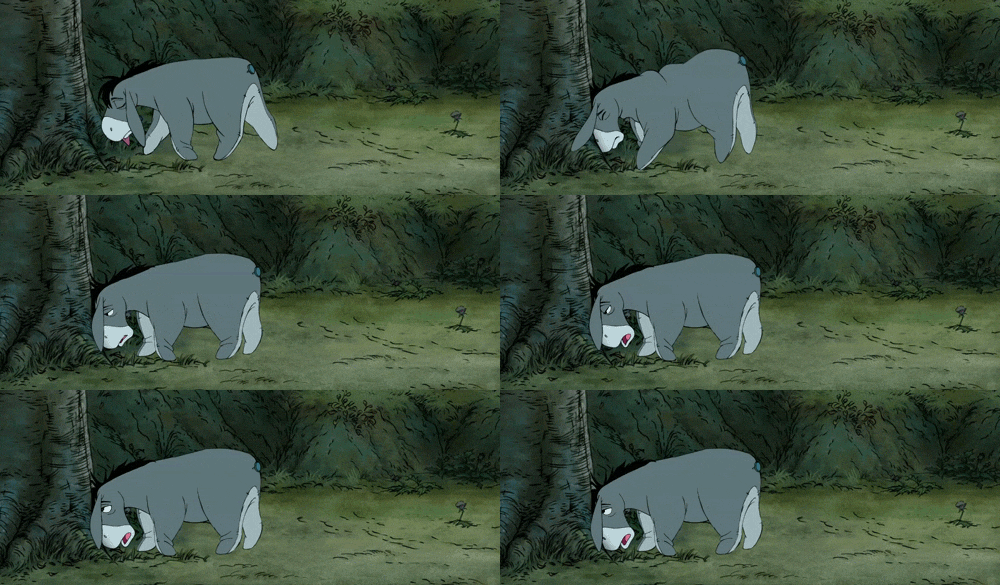
Eeyore bumping into a tree
source

Why did I even agree to give this talk? Why did I propose this topic? But then, it the midst of trying to figure out if it was too late to change my topic, I realized I wouldn’t need to.


David Tennant, as The Doctor, looking like he just figured something out
source

I remembered a conversation I had with a coworker back when I was brand new to the field myself. I don’t remember what we were discussing, other than I’d asked for advice, but I do remember that they stopped and looked away for a moment before continuing. They said, “you know what? That’s good advice for me, too. I find myself doing that a lot… giving advice I need to hear myself.”

So that’s where I am with this topic.

a picture of the Earth as seen from the moon, with the words "You are here" and "we all are."
source
I’ve done a lot of reading and a lot of soul searching. I even hosted an online chat as part of my work on #libleadgender related to work-life balance. But I don’t want this to come off sounding like “do as I say, not as I do.” I’m still trying to figure this work-life balance thing out myself, and I wanted to be upfront about it: I still need advice, too. Regardless, I have learned some things, and I want to share them with you.

The first big thing I want to discuss is embodied in another title I almost gave this talk:  "It's a Marathon, Not a Sprint: On Work Life Balance in Librarianship."

Wile E. Coyote, running
source


There's no other way to say it other than it's a long road. And sure, saying "it’s a long road" is a cliché, but it’s something I remind myself of probably on a weekly basis. Speaking of clichés, though, let’s think about this in terms of the analogy I did pick for my talk title: plants and gardening. I’m not much of a gardener, to be honest. I even managed to kill a bamboo plant, which is supposedly almost impossible to do. But I do know that planting and tending a garden is a long game. Preparing the soil, figuring out what plants work best in your climate and in the space you have, getting or growing seedlings, planting, weeding, harvesting. You need to think of your lives and jobs the same way because your careers are hopefully going to be a long road.

It’s easy enough to say this, right? But how do you put such an abstract thought into action? Well, here are my thoughts.

First, professional development. You’ve got to keep learning, or else you’re stalled. Think about this: when I was in graduate school, the hot new wireless protocol was 802.11b. By the time I graduated, we had 802.11g. So the stuff I learned in my "Computers in Libraries" class was out of date by the time I graduated. Never mind the fact that there have been 6 or 7 further protocols since then. And that’s just one small area of knowledge from one class. The skill that will serve you best in the long run is the ability to learn and adapt, and librarians are great at that despite the reputation we somehow picked up, but it has to be a conscious effort.

The good news is that you are already on top of this idea, since you’re reading a libraries and librarianship oriented blog. Even if you don't read my blog every time I publish something new, I hope you're taking time every week to pursue some professional development - reading or otherwise. I have to admit that, even though I require everyone on my staff to spend at least an hour each week working on some form of professional development, I have a hard time fitting it in myself. Easy to say, but hard to do.

Another reason why you need to take time for professional development, even if your main duty is staffing a service location like the circulation desk or the reference desk, is to give yourself a break from having to do emotional labor. For those of you who are unfamiliar with the term, it’s the part of your work performance that has to do with the emotions you display. There’s a very limited range of emotions that are appropriate for when you are working with the public, but we all have lives beyond the performance of our duties, right? It doesn't matter to some. Get into a fender bender on the way to work? Too bad, you have to at least pretend be in a good mood if you’re doing a story hour for toddlers. Get into a fight with your best friend? Better put that anger aside if you’re supposed to be leading a class of incoming freshmen through a basic introduction to information literacy. Get proposed to by the love of your life? You can't show how giddy happy you are because you need to be calm and steady if you’re staffing the reference desk for a three hour shift. But that hour of professional development you spend in your office or at your desk or in your work space, away from the public, that hour of turning everything else off in favor of reading the latest issue of College and Research Libraries or watching a webinar on conflict resolution… that’s an hour when you can just be yourself. And we all need that kind of break. Making sure you get that kind of space in your work week is crucial to being successful on the long haul.

Second, figure out your workflow.


a Rube Goldberg machine made out of legos
source

I’ve spent a lot of time researching this and developing my own workflow, but it’s not really something I can teach you because everyone will have a different version. Further, what works for you might change over time - I know it has for me. Right now, I mostly use a website called Habitica that turns my daily to do list into a role playing game. I’m a big ol' nerd, so the goofy 8 bit graphics make me smile every time I’m on the Habitica website. Another attraction of this site is that I go adventuring with a party, so any time I don’t accomplish a task, Habitica lets whatever monster we’re fighting injure the whole party. I also use a paper planner. The act of writing myself a list helps me organize the following day.

If you're trying to get a handle on your workflow, there are some things that I think everyone needs to remember:
  1. You need a way to capture ideas immediately. This can be an Evernote file or a Google doc or a box on your desk where you throw scraps of paper with things scribbled on them. Don’t trust your memory - human memories are faulty at the best of times, but when you’re under a lot of stress - like with a forever long To Do list - your brain will turn into a sieve.
  1. You need to look at your ideas on a regular basis. I try to do it weekly, but never go more than two weeks. Capturing things immediately is a way to get them out of your brain to make room for other processes, but you can’t ignore those ideas otherwise you won’t have processing room.
  1. Keep track of your accomplishments. When you’re thinking long term, sometimes smaller accomplishments fade away and all you can see is the big things you haven’t done yet. Any time I start to feel overwhelmed by everything I want to do to improve my library and the service we provide to our community, I look at the list of things I’ve already done. I wish someone had told me to do this early in my career because this, more than anything, keeps me from burning out when I feel overwhelmed.
  1. You need to learn to let go of projects. This is one of the hardest things anyone ever has to do, especially when you love what you do and really want to give the best to the community you’re serving. Sometimes it will be a project that is going well but that isn’t as successful as you’d hoped. Other times it will be a great idea that you just don’t have the money or staffing or energy to accomplish. I find prioritizing easiest when I look at my ideas and ongoing projects in light of the mission statement of both my library and my college. If your library doesn’t have a mission statement, or if it’s a long and convoluted mess of a statement, you could always look at your job description or sit down with your boss to figure out which things are most important.

The third thing you need to remember when thinking about the long haul is that work-life balance is a myth.


Mythbusters picture with the word "busted" over the picture.
source

It's never going to happen in the short term. The idea of work-life balance is a myth perpetrated to make us feel even more like failures. It’s the unicorn I was chasing when I first proposed this topic to the organizing committee. If you are tenure track or have a new position or are working on another advanced degree, of course you’re going to throw yourself into your job. That’s the way it works and in a lot of ways, it’s necessary to lose yourself in your job for at times. But there are also going to be times when you’re personal life will take over. You could get really sick - everything from a bad case of the flu to something really serious. You could get pregnant or adopt a kid, at which point you better darn well focus on that new little life. You could end up having to take care of a sick relative.

Don’t neglect your personal life completely because you can’t just be the job. But don’t feel bad about those times when you have to say no thanks to going out with friends because you have an article revision due or a grant proposal due at work. But don’t neglect. The most important thing to remember during those stretches where work seems to blot out everything is the next big theme I want to address: self care.


Treat. Yo. Self.
source

Now, let me dispense with a common misconception. Self care is not the same thing as self indulgence. During a recent #libleadgender conversation, someone expressed a concern that self care could be seen as “Treat Yo Self.” Nothing could be further from the truth. When people talk about self-care, they aren’t talking about buying themselves a movie caliber Batman costume. When people talk about self-care, they are talking about drinking enough water and taking a sick day if you have a fever. They’re literally talking about taking care of themselves.

This is another aspect that can be easier said than done, so I want to share with you some of the things I think everyone should do.


a ring tailed lemur sitting as if it is meditating
source

First, spend at least 5 to 10 minutes every single day being still and quiet. If you are religious, this can be prayer or meditation. If you aren’t religious, it can still be meditation but it can also be sitting outside. And I’m gonna say something that you might not want to hear, but watching television or listening to a podcast isn’t gonna cut it. Think about the surface of a pond after someone has thrown a pebble or a boulder or anything into it. What does it take to get the water to rest and be still? It’s not more input. I can’t even tell you how much research has been done into this idea. Really, everything I’m sharing here is based on research. This is basic self care and so beneficial.


Ren and Stimpy eating sandwiches
source

Next, take a lunch break. The occasional - like once or twice a month - lunch hour spent snarfing food at your desk while you continue to work on a big project is okay. But don’t make a habit of it. You are not doing yourself or anyone else any good if you work work work straight through. In fact, there are countless studies and articles that talk about how taking a break and letting yourself rest improves the quality of your work. If you’re more introverted, go somewhere quiet away from your office and eat lunch there. If you’re recharged by spending time with people, go to the staff room or the dining hall or to a friend’s office to eat.


sleeping black kitten
source

Here’s another one: you need to get sleep. But remember that enough sleep for one person isn’t going to be enough for someone else. I need 7 hours or else I’m cranky and shaky, although I can every once in a while survive on 5 or 6. I’m middle aged, so I’m cranky enough already. Trust me, you don’t want to see me crankier. If you’re having a hard time sleeping, whether from anxiety or other reasons, get yourself to a doctor. I went and slept overnight at a hospital a few years ago in order to figure out why I wasn’t sleeping well, and you better believe I followed every one of my doctor’s suggestions. Insomnia and lack of sleep only makes things worse, so staying up late to get more done… well, that isn’t going to cut it either.


a goat and a baby rhino playing together
source

Another thing you need to do is you need to move. Yes, I’m talking about exercise if you’re capable of it, but I’m also talking about seeing different sights or hearing different sounds. Don’t overtax yourself or think you’re not doing things right if you can’t take a walk because you have mobility issues. Even just moving to a different part of your library can help you.


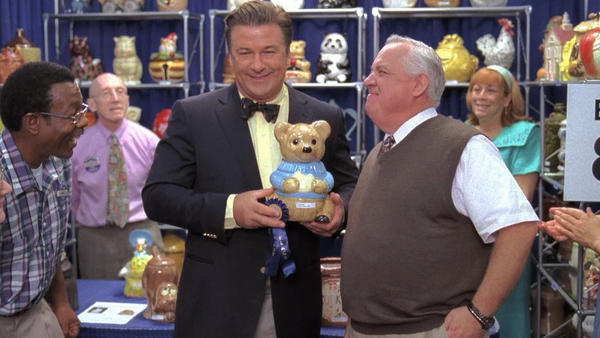
30 Rock screen shot of Alec Baldwin holding a cookie jar
source
The final admonition I have about self-care is that you need to make time in your life for something that isn’t librarian related. You need a hobby or a club or other kind of activity, and reading doesn’t count because that’s still library related.

[At this point in the keynote, I asked people to discuss hobbies - something they love but have neglected and something they've always wanted to try - with the people sitting next to them, before sharing my own hobbies.]

For something I love to do, but that I haven’t done in a while, I need to admit to neglecting my guitar. I didn’t pick it up until a couple of years ago, but a couple of months back when the semester started, that 10 to 15 minutes I used to spend with my guitar went into other things instead. And for me, playing the guitar and learning a new song or new technique is bliss - even when it’s challenging. Maybe especially when it’s challenging.
And for something I want to do, I want to learn to be a better baker. I can do a few thing, like my great grandmother’s pumpkin bread recipe or pizza dough, but I really envy people who are good bakers. And more than anything else, I want to learn to make bagels. I am obsessed with bagels lately, and I end up spending so much money to get the good ones at the bakery.

a picture of me with my guitar

a classical looking painting of soldiers on horseback, with one holding a bagel
source

As for me, I will learn a new song and try a bagel recipe. Before Thanksgiving. And I’m expecting you all to hold me accountable. I’ll post that I learned the song and pictures of my bagels, and if I don’t meet the deadline, please call me out. In fact, if I don’t meet that deadline, I’ll donate $100 to a charity and I’ll let you all chose. Deal?


the cast of Firefly
source

And this leads me to my third big point: you need to have a support network. Before I get into this part, I want each of you to exchange contact information with one of the people you just talked with and pick which hobby or activity you are definitely going to do over the next month. You’re going to hold each other accountable just like I’m asking you to hold me accountable. So take a moment more to give business cards or email addresses or whatever.

A support network is how self-care and thinking long term can come together.

One way this works is with goal setting, like the one I just had you all set. So let me tell you about my best friend. She’s this amazing, strong, and kind person.


a conversation between Leslie Knope and Anne Perkins about Harry Potter
source

For those of you who know Parks & Recreation, my best friend is definitely the Anne Perkins to my Leslie Knope. I even made her watch all 8 Harry Potter movies, but luckily for me my bestie loved Harry Potter. Anyway, we have become each other’s life coaches. We meet once a week to set goals for ourselves for the next week and to check if we’ve met the goals from the previous week. If we met the goals, we get to take a nap that weekend. If we didn’t, we have to socialize with a coworker who drives us crazy. It’s making the promise to someone else, with ramifications, that gets me to keep up with the goals I set for myself.

Buffy the Vampire Slayer saying "But I have to save the world! Again!"
source

Another way this works is you have a cheering section when you start to doubt yourself. When I was new in my current position, I had a day that left me feeling worn down and wrung out. I was exhausted and feeling a little despondent because something I’d been working on for a while had gotten stalled yet again. A good friend of mine was trying to make me feel better. I told him that I couldn’t keep up my normal witty banter because I felt like Buffy Summers after she triumphed over the demon mayor, and that I was at the “fire bad; tree pretty” level of tired. My friend responded, “so what you’re saying is that on your worst day you’re still a vampire slayer?” It made me laugh, which made me feel better.

My best friend is a psychology professor and my online friend is an academic librarian who mostly focuses on technical services type stuff. But I also have a professional support network that keeps me going long term. I know so many library administrators who have mentored me or who I mentor, officially and unofficially. I can reach out to them and ask everything from how do I handle a particularly sticky situation with a faculty member, to recommendations for compressed shelving vendors, and beyond.
You need a support network and friends both within and outside of the profession, both within and outside of your particular specialty in librarianship. You need people who know exactly what you’re going through and doing, and people who have only vague knowledge. And this is the kind of work-life balance you need to achieve.

a hummingbird and some bees drinking from the same water source
source

And to bring this back to the metaphor I picked for the talk, gardening, again, support networks are like an ecosystem supporting multiple people just like a garden can support multiple kinds of life. Okay, I’ll admit it, I am beating the gardening analogy to death a bit here because I really wanted an excuse to use this picture, but you get my point.

baby flying fox getting wrapped in a blanket
source

Anyway, I want to wrap this up, so let me remind you of my main points, things I wish someone had told me when I was new in this field and an early career information professional:

  • You need to think long term and long distance. Hopefully you’ll all have long and fruitful careers, so you need to pace yourself and think beyond this moment.
  • You need to take care of yourself. Have a life outside of your career, be still once in a while, and get some rest.
  • And you need to have a support network as well as supporting others. Keep each other honest, Keep each other on task. And keep each other laughing.

Thanks again to the organizing committee and to all the conference attendees. I'm proud of how well this talk went, and I hope we all take my advice.