Tuesday, February 16, 2016

The Do's and Don't's Of Asking For References

source

A local business called me recently. They called to ask about someone who used to work in this library. "[name] listed you as a reference. Do you have a moment to talk?" After a brief pause while I shifted mental gears, I happily spoke with the caller. The former employee was someone we'd been sorry to see go. But after I'd hung up, I was left feeling a little awkward. I said lots of good things, but coming out of the blue like that - with no idea exactly what the job entailed - I didn't do as good of a job as I could have.

This was the most recent instance, but this isn't uncommon. I'd say I get calls like that five or six times each semester. I've only been a director for three years, so I can't imagine how often people who've been bosses longer get those kinds of calls. I can pretty much always come up with something helpful to say, but these calls that come with no warning always leave me feeling caught flat-footed.

In the interest of cutting down on this feeling, or at the very least helping other people to not be caught out the way I was, here's my advice for how to handle references.

When you want someone to serve as a reference (for whatever circumstance)...
  • Ask them well ahead of time. "Graduation is coming up fast and I'm going to start looking for a job. May I list you as a reference?"
  • Be professional, but polite, when you ask. 
  • Warning people again when you apply for a job - each and every time you do, not just at the beginning of a job search.
  • Always let your references know as much as possible about the job(s). Sometimes all it takes is, "I'm applying to be a substitute teacher while I look for more permanent gigs," but if you can I recommend including a link to the job advertisement.
  • If it's been a while since you talked to/worked with/took a class from the person, let the know how you've changed and what you've done in the intervening time. Send them a recent resume/CV, a transcript, etc.
  • Even after all this prep, you need to be prepared for people to say no. You obviously want to ask people who you think have a good opinion of you and will help your case (different application processes ask for different kinds of references, such as coworkers or direct supervisors). However, the biggest reason you need to ask ahead of time is what if this person doesn't like you after all. True story: I've turned down more than one person who asked me to be a reference.

When you need a letter of reference...

  • All of the above still applies.
  • You should also offer to write a draft letter for them to use. If you're unsure what to include in a letter like that, turn to your friendly neighborhood search engine and look for "[grad school/job/etc.] recommendation letter." Alternatively, a lot of college/university career placement centers have samples you can use. Most people will turn you down, but some will take the letter you wrote and sign it.
  • Give the person you've asked for a reference as much warning as possible. Being available for a phone call is one thing, but writing a letter can be a serious time commitment.


In general...

  • Keep in touch with professors and former employers and anybody else who could serve as a reference, when you can. This can be hard, but since these people are likely past mentors, you might already be in touch anyway. Don't force it, though.
  • When you decide who to ask, remember that you'll want them to be able to speak to your qualities and experiences with the people (person) in charge of hiring decisions. I have a list of a group of people who I can ask, and not all of them are former supervisors. Letting your references know why you've asked them, such as "Jeff, I'm asking because you and I were part of the team that rewrote that part of the core curriculum, and faculty collaboration is a big part of the job description."
  • Be respectful of other people's time. 


Those of you who are asked to be references: did I leave anything out?

And good luck with your job searches.

Thursday, February 11, 2016

Interview Post: Lisa Hinchliffe


Name?
Lisa Janicke Hinchliffe

Current job?

Professor and Coordinator for Information Literacy Services and Instruction, University Library & Affiliated Faculty, Graduate School of Library and Information Science, University of Illinois at Urbana-Champaign.

How long have you been in the field?

In Fall of 1989, I started college at the University of St. Thomas and took a library tour. The librarian mentioned that they were hiring work-study students. I applied on the spot – it seemed like a great job given my intention to go to law school. A year in, I had changed my career aspirations and prepared to head off to library school after graduation. I started my first librarian position in the fall of 1995 at Parkland (Community) College.

How Do You Work?

What is your office/workspace like?

My first response is “presentable” – though at this point in the school year it could stand some tidying up. I’m fortunate to have a great office in a historic library building. It has a Dutch door and a large window that brings in a lot of light. Of course, along with that charm comes odd corners and a radiator, but I hope I never have to give my office up because I love it.

How do you organize your days?
Though I use an online calendar (Outlook) at work, I’m dependent on my paper Weekly At-A-Glance Calendar for keeping me organized overall. This isn’t just for recording meetings but also notes, to-do lists, etc. I keep trying to migrate to an online system but so far have not found one that works better than my print system!  

What do you spend most of your time doing?
As the Coordinator for Information Literacy in a large and very decentralized research library, I spend most of my time creating and extending infrastructure – the tools, resources, communications systems, workflows, campus collaborations, information sharing, etc. – that support my colleagues and the information literacy programs that they create for their user communities.

In addition, I am involved with a number of library-wide projects where my role is to bring the lens of teaching and learning to the work at hand (e.g., What are the teaching and learning considerations as we develop our discovery systems? How does the website design impact our instruction programs and what re-design would enable better student learning?).

Finally, as a faculty member, professional engagement is expected, and I work on my research every week. Building and achieving a research agenda is a lifelong task!

What is a typical day like for you?
I typically have 4-6 meetings each day, and the remaining time is spent on email, writing, and collaborative projects. I am also taking coursework for a PhD in Global Studies in Education/Educational Policy, so I have class and homework many evenings.

What are you reading right now?
I just started A History of American Higher Education and Between Citizens and the State: The Politics of American Higher Education in the 20th Century. I’ve also been re-reading The Life-Changing Magic of Tidying Up. I subscribe to a long list of magazines about travel and am always in the middle of an issue of National Geographic Traveler, Conde Nast Traveler, AFAR, etc.

What's the best professional advice you've ever received?
Pick your battles.

What have you found yourself doing at work that you never expected?
Standing as a candidate for President of the American Library Association. It was such an honor to be nominated for the ballot – to be trusted to step into the role of representing the profession, libraries, and our values and principles.

Inside the Library Studio

What is your favorite word?
Repertoire.

What is your least favorite word?
Problem.

What profession other than your own would you love to attempt?
Travel writer. I absolutely love to travel and read about travel. I dipped my toe into the writing side last year. It was a challenge to write in a non-academic mode, but I had a great editor who mentored me through 5 – yes, 5! – drafts through to publication: “An Inner Place.”

What profession would you never want to attempt?
There are a lot of jobs that I would not want but I’m not a “never” sort of person.

Everything Else

What superpower do you wish you had?
Teleportation. Though I’d like to be selective about using it. Sometimes the journey is part of the destination but much of the time it would be really useful to save the time spent en route.

What are you most proud of in your career?
I’ve had the opportunity to work with hundreds of library school students – mentoring, supervising assistantships/practicums/independent studies, co-presenting, co-authoring, teaching, etc. It is a privilege to be part of their learning and to learn from them. I’m so proud of all of them.

If you're willing to share, tell about a mistake you made on the job.
I won’t tell the specifics because I need to honor the privacy of others who were involved in the situation but I’ll share a lesson I learned very early in my career. The lesson is that, even when a situation seems obvious, you should investigate and confirm before taking action. You’ll avoid damaging relationships and save time in the long run.

When you aren't at work, what are you likely doing?
Traveling or planning travel. (Notice a theme?)

Who else would you like to see answer these questions?
Courtney Young


Lisa is on Twitter as @lisalibrarian.

Tuesday, February 9, 2016

Time for Lunch

"Time for Lunch," by Finn Frode 

I've been having lunch about once a month with a few local public library administrators. It started out just me and the director of my city's public library, then we ran into the county librarian at that restaurant another time, and now the assistant director of my city's public library is coming along as well.

There are a number of reasons why I'm excited about this:
  • It's a simple but effective way for me to contribute to bettering the town-gown relationship - which is one of our stated goals in my college's recent strategic plan. (This is common in higher ed, but is especially important for small schools like mine.) 
  • Our jobs are much more similar than you'd think. I work to further integrate information literacy into the curriculum while they work to make sure storytime has some educational substance and not just flash. I work with my school's administrators to best use our financial resources, and they work with city/county/state officials. Heck, our staffs even overlap (one of my library associates also works at the county library and another also works at the city library).
  • We also have a fair amount of overlap in the constituencies we serve. Set aside the fact that we're in the same consortium, there's also the fact that we have plenty of students who grew up in the local area. Add to that how many of our faculty live in this county and it's clear we have overlapping missions as well.

I don't know if these kinds of relationships are possible in bigger cities and/or at bigger schools, but it's got to be worth a look. We're starting to talk about small scale partnership plans, too. It's nice to think that we're doing something substantive as we chat over food at the local Indian restaurant, but if nothing else: it's nice to have conversations with peers who understand what my job is like.

Thursday, February 4, 2016

Just for Fun: Would You Like to Play A Game?

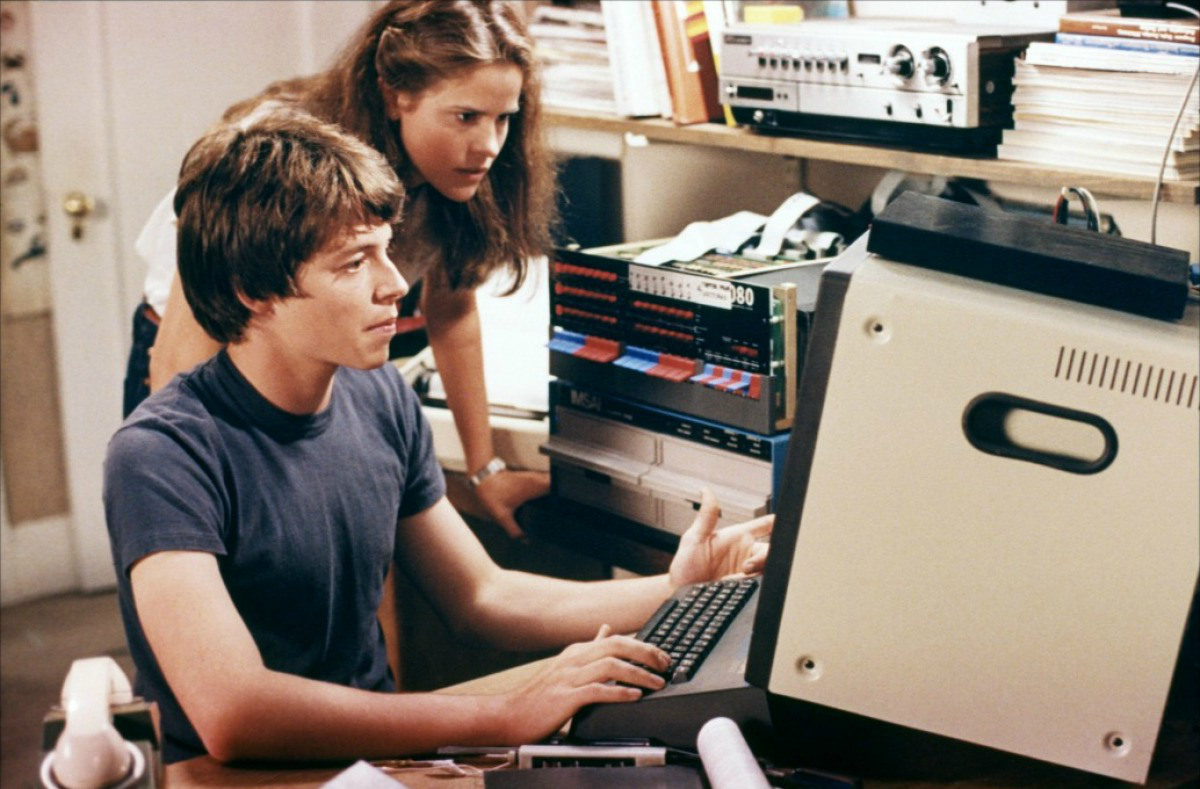
I know the title of this post could lead you to think I wrote about War Games this month. It's true that would be a worthy post, if for no other reason than to goggle at how young Matthew Broderick and Ally Sheedy were in that movie. But in this case I really *am* asking you if you'd like to play a game, because I have fallen deeply and madly in love with independent board games.

The games listed here aren't in any particular order (except I left my favorite for last), nor is this list an exhaustive representation of games I've loved and played. To be honest, this is more a way to flush out other board game lovers among my readers and followers than anything else.

photo borrowed from the successful Kickstarter campaign

A long time ago in a galaxy far, far away, I attended Unpub 4 - an annual unpublished games festival. While I was there, I got to meet Daniel Solis who makes great board and card games. I haven't played all of his games yet, which makes me feel a bit of a slacker since he's since become a friend, but of the ones I've played thus far, Belle of the Ball is my favorite. The point of the game is to throw a better party than the other players, and there are things you can do to both make your party better and to muck up other parties. It has elements of luck (card draw) as well as strategy, which is a winning - pun intended - combination in my mind. Also, the art, by Jacqui Davis, is perfectly suited to the theme.


picture borrowed from the publisher's website

Imagine if the Gashlycrumb Tinies by Edward Gorey were turned into a storytelling card game, and you'll have a good idea of what Gloom is like. Each player has a family and the point of the game is to make your family miserable and then eventually kill them off. Along the way you can make your opponents' families happy as well. The fun of this game isn't necessarily in the winning or the losing, however. The best part is the stories you tell to make the cards you play make sense. Did your opponent just give a member of their family a likely terminal disease? Well, if you have the right cards, you can tell a lovely tale of a miraculous cure culminating in marriage to the doctor who cured them. Of course, it's possible that your opponent will in turn have that same doctor fail to show up at the church. To be honest, this is a mild story compared to some I've told and/or heard when playing this game.

Martin Fivebones supervises a game of Takenoko between me and my boyfriend.

Pretend you're a gardener for the Emperor. Sweet gig, right? But then the Emperor is given a giant panda who is allowed to wander around the gardens, eating whatever bamboo he wants to eat. You're still expected to tend and expand the garden, but you can't harm the panda. That's the perhaps overly twee premise of my favorite game, Takenoko. The learning curve on this game is pretty steep, something that is true of a lot of independent board games I've played, but after that first game it's all good. You have quests to fulfill, such as growing a bunch of pink bamboo to a certain height or getting the panda to eat one pink and one green and one yellow section of bamboo, and the first person to complete enough quests also gets honored by the Emperor. Yes, it's hella complicated. Yes, it's worth learning because there is something so satisfying about it - win or lose.

How about you? Do you like board games? Which are your favorites?

Tuesday, February 2, 2016

Information Today Interview

I was one of three people interviewed for an article on Information Today, Inc. Take a look!

The whole thing makes me feel very cool (see below for how cool), so thanks to Brandi Scardilli for approaching me about it.


Thursday, January 28, 2016

Interview Post: Carolyn Ciesla


Biographical

Name?

Carolyn Henley Ciesla

Current job?

Instructional Services Librarian and Associate Professor at a smallish (2,900 FTE) community college in the south Chicago suburbs.

How long have you been in the field?

I received my MLIS in 2010 but have been working the library field since 2008. I jumped from public to academic libraryland in 2013.

How Do You Work?

What is your office/workspace like?

I have my own office!!! (Extra exclamation points because this was a first for me.) I try to keep it tidy, but by the end of the semester I’m lucky if I can see the actual surface of my desk. I also want my office to represent me, so I have a GIANT bulletin board with lots of collected memorabilia and silly items, as well as my fandom shelf.

How do you organize your days?
My teaching schedule is getting heavier, so between that and time at the reference desk – and MEETINGS! – I don’t have a lot of time to just sit and work. As a result, I have to be strict with my days if I want to get anything done. Mornings are usually when I try to work on brain-heavy activities, like writing or course/lesson planning. Afternoons are for catching up on professional reading and answering emails.

What do you spend most of your time doing?
I feel like I spend the most amount of time scrambling to finish something because I either put it off or had other things I had to finish first. I’d like to get away from the “headless chicken” model of working.

What is a typical day like for you?
Part of why I love being a librarian is that no two days are exactly the same. They usually involve some combination of: teaching, meeting with students, meeting with other faculty, meeting with my dean, sitting at the reference desk, helping someone (or several someones) print something, checking my email, checking my email again, opening too many tabs and never being able to read everything, did I mention checking my email?, oh, and internally panicking about all the things.

What are you reading right now?
For work: I have, like, seven articles right now on my desk, some for classes and some for me, plus several back issues of C&RL News. For pleasure: Salt to the Sea by Ruta Sepetys. It’s a story about WWII told from several converging points of view, and it’s gorgeous and heartbreaking. I’m taking a departure from my usual horror/suspense/dystopia titles.

What's the best professional advice you've ever received?
Here’s the thing: I’m sure I’ve received wonderful advice. It’s just… I can’t remember any of it. (Future advice givers: don’t bother with me. I won’t remember it.) Let’s just all assume it was moving and inspirational and motivating.

What have you found yourself doing at work that you never expected?
Telling people to walk around the vomit.

Inside the Library Studio

What is your favorite word?
It changes regularly but is always something fun to say. Right now, it’s flibbertigibbet.

What is your least favorite word?
Pus.

What profession other than your own would you love to attempt?
Movie trailer editor.

What profession would you never want to attempt?
Podiatrist. Dentist. I can’t deal with other people’s feet or mouths.

Everything Else

What superpower do you wish you had?
Teleportation. I hate flying.

What are you most proud of in your career?
The little moments when I’m teaching or talking to a student and it clicks. Then they give me a high five.

If you're willing to share, tell about a mistake you made on the job.
I am an organizational mess, and I’m in charge of several schedules. I’ve double-booked classrooms, I’ve neglected to turn in important forms, and I’ve forgotten to schedule coverage for missed shifts. It’s taught me to write everything down, and take time to complete each task before moving on to another.

When you aren't at work, what are you likely doing?
Napping. Driving. (Ha, I typed drinking instead of driving. Sure, that too.) Hanging out with my husband and daughter.

Who else would you like to see answer these questions?
Amy Watson


Carolyn is on Twitter as @papersquared. This her second post for LtaYL. The first was "All In: Getting the Most Out of the ACRL Immersion Program."

Tuesday, January 26, 2016

Dressing for Interviews: An Extended Answer


I've been an on-again-off-again contributor to the "Further Questions" series on Hiring Librarians. The "off-again" part is because sometimes I don't have any experience from which to answer or I'm just too busy, so I'm glad I had a moment when the question that was published yesterday showed up in my email.

The question:
"Which outfit is most appropriate to wear to an interview with your organization? Please pick one for women and one for men, and feel free to provide commentary as to why you chose one over the others (or share how you might change an outfit). Bonus question: Can you share any funny stories about horrifying interview outfits?" (There are options from which respondents chose at that link.)
My answer:
"Since gender isn't a binary, I say you wear whatever you feel is appropriate to the level for which you're applying. In general, dress just a little bit nicer than you think you would dress if you got the job. If you feel unsure, check with a friend/contact who already has a job in the kind of library where you are interviewing. Don't know anyone? Feel free to reach out to me and I'll get you in touch with someone who can help."
I feel the need to expand upon what I wrote there, partially because I'm still angry at the assumption of gender as a binary and partially because of the great discussion that happened on Twitter and other places after that Hiring Librarians post was published.

Here are some things that I know are true:
  • I've talked before about my privilege (or lack thereof), but it's important to note that since I'm caucasian and mostly cisgendered I can bend or even break some of the so called interview outfit fashion rules with relative impunity. YMMV.
  • Performance of gender and performance of race factor into this in a big way.
  • I already have a job in a library, so in some ways it's easy for me to talk.
  • But I am also fat, and fat prejudice is a problem.

Having explained all that, I still stand by my answer. Wear what feels appropriate. Wear an outfit that makes you feel confident but that is also comfortable. I suggest you avoid high heels unless you are super used to walking around in them all day, because you will be walking much more than you expect to walk. I also suggest you dress appropriate for the weather, for the most part. If you don't think you can dress following my advice and still stand a chance at getting a job offer, please consider turning the interview down. Remember you're going to be at this library a lot, and if you won't feel comfortable dressing the way you normally dress while at work, you will not be happy there.  

One last thing... If I'm ever lucky enough to interview you for employment at my library, please rest assured that "it don't matter what you wear, [we're] checking out your savoir faire" and - of course - your qualifications.


(I hope you'll forgive the light hearted videos that are bookending this post. I needed to find a way to laugh about this and thought you might need a laugh, too.)